Showing posts with label tainted legacy. Show all posts

Sunday, November 1, 2015

Eulogy for Jean Thompson

Jean at sixteen


On Sunday, September 20th, my cousin, Jean Thompson, passed away.

Jean grew up in Kansas, and I grew up in California. I didn't even know she existed until I was in my late 40's, doing research for Tainted Legacy, and Alice Lee (Zangaro) suggested I call her for information on the Williams family, telling me that we were probably related. We were, but I didn't know that until Jean kindly sent me pages and pages of the Williams genealogy. I had some trepidation about calling her at first, but she was immediately kind, open and embracing—characteristics which she apparently extended to most folks throughout her life, regardless of how she met them.

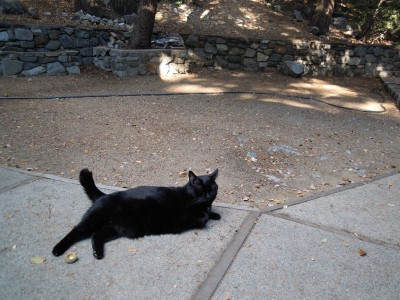
It seems strange to acknowledge that I never met her in person. After we connected, we spoke every few months by telephone; whenever I had an hour or so to spare on a Sunday and needed to laugh, I would call her. Because she and my grandmother grew up in the same geographical region (although Jean was much, much younger), she reminded me of Grandma Lila every time we spoke, using such expressions as "I'm not a-gonna do it" (something she stated emphatically to the doctor who told her to quit smoking) and adding that elusive "r" to "warsh, as in, "We had to warsh up the floor after Murphy brought us a bird this mornin'." Murphy was her black cat.

Like all the women in the Williams line, including my mother, grandmother and great-grandmother, Jean might have seemed simple in her speech and demeanor, but she was highly sophisticated in her intellect and insight into the human condition. Our conversations always began with light-hearted, jovial humor, but at some point we would begin to talk about our kids and grandkids, and she amazed me with what she understood about human behavior. Truly, she was an old soul with unfathomable wisdom.

Beyond that, the attribute most characteristic of her was the love she exuded for everyone, and I mean everyone. She adored her children, her grandchildren and her great-grandchildren—and everyone associated with them. Although she'd never spoken to any of my kids or grandkids, she asked about them often when we talked. At the end of every conversation, we always engaged in a gentle competition to see who could out-love the other. ("I love you a million." "Times ten! Ha ha ha!" "I love you to the moon and back!") Jean always won.


When she passed, the outpouring on her Facebook page was extraordinary. People are still posting notes of love and remembrance all these weeks later. She is deeply and daily missed by her family. She is certainly missed by me. And she will be missed by all those great-grands who grow up without her influence. But she has left a legacy in the way she has raised her children, and they will now step up to be those who readily love and embrace others as she did, a great heirloom to treasure from a truly great lady.

Sunday, August 23, 2015

Go Set a Watchman


Atticus Finch is not a real person. He is a character in a novel. While he may be multifaceted and dynamic as a character, he is that and only that—a character, comprised of the requisite parts given him by Harper Lee when she wrote the consummate American novel, To Kill a Mockingbird and also when she wrote the first draft of that novel, which is now known as Go Set a Watchman.

For in fact, that is exactly what Go Set a Watchman is—a first draft, the initial disorganized and somewhat plotless musings of a slightly younger Harper Lee than the one who wrote Mockingbird. Miss Lee's publisher, HarperCollins, has done the business of promoting Watchman as if it were an entirely separate novel—because that is what their identity is; they are a business. As much as we would like to think of publishing houses as being run by noble, educated persons who are nearly super-heroes in their defense of great literature, the truth is, HarperCollins is a business organized for the purpose of making money. Lots and lots of money.

And so it seems they have done with Watchman. (It is currently number one in literature/classics on Amazon.) But while they touted this book as 'a new novel by Harper Lee,' those good folks know exactly what this is; it is the first pages of a novel written by a young college student who thought she might like to write about the South, her hometown, and her father. In Watchman, she characterizes Atticus as having caved to the agenda of the racists of his town. In Mockingbird, he stands against such folk. Which Atticus best reflects Amasa Coleman Lee, Harper's real-life father? Who can say, and we will never know, as our beloved Miss Lee, always reticent to give interviews, is now beyond the point of discussing either novel.

When I wrote Tainted Legacy, a book about my great-grandmother, Bertha Gifford, who is now vilified as a serial killer, I wrote the original draft to fit the current True Crime genre. After long discussions with a publisher who read that original draft, however, I decided to rewrite the book as a memoir. Now it is a book that I am quite proud of, as it reflects a wider scope of Bertha's story (which is also my grandmother's story and my mother's and mine as well). In the same way, I believe Harper Lee had similar discussions about her first go at a novel, and she came away with some ideas about how she wanted to change her portrayal of this character, Atticus Finch, and the town of Maycomb... and herself. Thus she produced the much beloved work we know today as Mockingbird. If only she'd had the presence of mind to toss that first manuscript in the incinerator... as I have done with my first attempt.


Saturday, July 20, 2013

The Truth about Bertha Gifford


I am Bertha Gifford's great-granddaughter.

She was my mother's grandmother, and my mother lived with her on a farm in Catawissa, Missouri on and off for a period of several years.  Since Mom--in her later years, when I was working on Tainted Legacy--told me everything she could possibly remember about Bertha, I feel I am uniquely qualified as an expert on Bertha.  The only person in the world who knows more about her than I do is historian Marc Houseman with the Washington Historical Society in Washington, Missouri--and he only "knows" more because his brain is a virtual file cabinet.  He remembers dates and names.  I remember nuances and impressions.  We've been great collaborators in our search for the truth about Bertha Gifford.

For the record:

Bertha was not convicted of 17 or 18 or 19 or 20 murders, nor was any evidence produced to substantiate that number.  Seventeen people, at a grand jury hearing, gave testimony regarding loved ones she had cared for who died.  Bertha was a "volunteer nurse" over a period of close to twenty years.  We have no record of how many people she cared for who didn't die.

After the grand jury hearing, two bodies were exhumed.  Both were found to contain arsenic.  Enough arsenic was present in the body of Ed Brinley to "kill seven men."  Keep in mind:

If your own body were tested today, arsenic would be detected.
There is arsenic in the water you drink--even if it comes through a filtering system.
Arsenic is present in ground water and well water.
Ed Brinley was a heavy drinker... during prohibition... when the alcohol consumed came from neighborhood stills.
Bertha Gifford was in the habit of ingesting arsenic as it was thought to be "good" for the circulation. This was a common practice in the 1920's.
As a volunteer nurse, Bertha admitted giving arsenic to people.  Her motivation, as she declared in a signed statement, was to help them.  Ain't nothing crazy about that.  Misguided, perhaps.  Arrogant.  But not crazy.  No more crazy than Dr. Conrad Murray was in giving propofol to Michael Jackson to "help him go to sleep."

Bertha Gifford was brought to trial in 1928 when most folks in small towns got their news from a weekly newspaper and/or their neighbors. A scandalous story such as Bertha's would keep folks buying papers for weeks.  After all, other forms of entertainment were limited compared to what we experience today.  Sensationalism in journalism was an accepted practice.  After all, editors were desirous of giving their readers a good story.  Courts, not newspapers, were responsible for presenting only factual evidence.

Forensics, in 1928, was a nascent art.

The doctor who continued to supervise Bertha as she cared for ill family members and neighbors was never called into question for any suspicious deaths--or for allowing her to continue nursing after patients died in her care.

My point in all this?  Too much time has elapsed for us to know the real truth about what happened with Bertha Gifford.  If I were to make the claim that she was not a homicidal maniac, my opinion would immediately be attributed to bias, and understandably so.  She was, after all, the beloved grandmother of my mother.  But as I mentioned, I do feel that relationship uniquely qualifies me to draw certain conclusions.

Saturday, December 31, 2011

News Flash

Sugar Plum... and Boo

I don’t want to disappoint anyone, but….

The world is not going to end in 2012.

Tell ya how I know:

First off, I just got news from the nice Chicken Soup folks that my piece on Sugar Plum will be included in the upcoming Chicken Soup for the Soul: I Can’t Believe My Cat Did That! The book doesn’t come out until late in the year, and I know Sug would be particularly disappointed if her book doesn’t get as much attention as Boo's book did.

Next off, I will be finishing the long-awaited dog book in the next couple of months, to be released some time this coming summer. I’ve promised the spirits of Sandy, Rufus, Sapo, Niki, Alex, Ellie, Ian, and Osa that this book will honor them as the good dogs they were (and still are, always, alive in my memory).

In addition, I will (finally) publish Ghost Grandma, the YA novel I wrote for NaNoWriMo six years ago. Yay! I love that book!

Then there’s that presidential election thing going on. We gotta see how it turns out, right? Enough said; I don’t want to alienate any readers with my intense political rantings. Mouth closed. Tongue quiet….

Best of all, some strange and wonderful things have been happening with Tainted Legacy. From what I can tell from TL's Facebook page and my Amazon stats, the book seems to have taken off in other parts of the country besides Missouri. I don’t know how, I don’t know why, but I am grateful to the Universe that the story of Bertha Gifford continues to be told (even though she doesn’t like it when people talk about her—yes, Great-Grandma, I knooooow).

And my grandson will graduate high school… and start college. Wow….

And anyway, we’re not getting out of this as easy as all that. We’ve created a lot of problems for Mother Earth with our greed and consumerism and self-centeredness. Just like when we were kids and made a mess and Mom came along to tell us, “You’re not going anywhere until this mess is cleaned up!” so the Universe will hold us accountable. We have many lessons yet to be learned. I’m still trying to remember to stand up straight and not slouch. (OK, Mom, OK!)


Osa, my dog, my soulmate, will be featured in the upcoming Lessons I Learned from the Dogs that Saved Me.


Thursday, June 30, 2011

Missing Mizzou

Photo by Ginger Collins-Justus


One week ago I landed in St. Louis at 4:30p.m. and by 8:00p.m. I was standing in a small family cemetery in Robertsville, watching lightning bugs dance just above the recently mown grass and listening to Marc Houseman tell me the tragic tale of the Finney family. People in California often chuckle when I tell them that I spend a great deal of my time while visiting Missouri just wandering around old graveyards. Mostly, they think I’m kidding. I understand why; most of our graveyards here are simply expansive acres of grass, with perhaps a tree planted here or there. We have little of the sense of place and history that folks in the mid-west, who’ve often lived their entire lives in the same town, do. I still remember my first visit to Missouri, driving down the highway with my mother in a small rental car and seeing a ‘real’ cemetery with above ground monuments. I pulled over, jumped out, and ran to look at headstones, snapping pictures right and left. There were birth and death dates in the 1800’s. Imagine that! Mom remained in the car, nonplussed at the diversion from our course. There was nothing novel there for her, having been raised on a farm in Missouri. But I could have spent hours just reading the names and epitaphs on the headstones, immersed in the imagined history of the deceased.

When I travel to cemeteries with Marc, I often don’t have to imagine the history; he is a walking directory of “Here lies…” information, and can often tell me what the person did for a living, what family members are still in the community, and other details which honor the life of the departed. On this trip, I also had the privilege of wandering through several cemeteries and a mausoleum with Ginger Justus, who is working on, among other projects, the restoration of the Oak Grove Mausoleum in St. Louis. Like Marc, Ginger is devoted to the preservation of the history and beauty connected to places of burial, and she, too, is a fount of information. It is her photo that graces the top of my blog today.

On this trip to MO, I also met Betty Green, a fan of Tainted Legacy and a woman with a contagiously youthful spirit and vigor. Betty lives in Catawissa, the small town where my great-grandmother lived, back in the country by the Meramec River, where cardinals and other birds exotic to California flit around her outdoor feeders. Betty was gracious enough to invite me for a visit, and I had a great time chatting with her and her husband, Jim, who is an actual veteran of the Battle of the Bulge (and co-author of a book about it).

And I met Cody Jones, a young man who has grown up not with privileges but with courage. His story was inspiring. (He told it to me, in a self-effacing way, as we enjoyed pizza together at the Pizza Hut in Pacific.) Cody and I share a similar connection in that we are both still hopeful that “the right one” will come along someday, and I asked permission to adopt Cody’s mantra of “I’d rather be alone than wish that I were.” Amen, my young friend, amen.

I also had lunch with Brenda Wiesehan and toured the Pacific Plaza Antique Mall where she works. She has arranged to carry copies of Tainted Legacy in the store, so there will be an outlet in Pacific for them on a regular basis.

On my last night in Missouri, I spoke about Bertha Gifford at the Scenic Regional Library in Union. A great and gracious crowd gathered. One gentleman was kind enough to mention that his grandfather had worked for the Giffords at one time and ate many a meal at their table—and lived a long and healthy life, apparently. Another woman spoke up to say proudly that her father had been on the grand jury which indicted my great-grandmother. Amazing….

In our frenetic lifestyles here in Cali, we tend to overlook the fact that there are stories everywhere. Returning to Missouri every year gives me the opportunity to slow down—way down—and simply listen to some of them… or imagine them from the spare lines on tombstones.