Down the street and around the corner from me lives a woman who keeps her front yard in immaculate shape, weeding and trimming and cultivating incessantly, it seems. Not to sound pervy, but if pressed, I could pick her out of a line-up of neighbors based on her backside alone--because that's essentially the view I have of her every time I drive by--bent over, pulling weeds, clipping roses.... I've seen her out there after dark, wearing a headlamp, going after--what? Weeds? Snails? I applaud her. The thing is, I could be her.
That's one of the problems with gardening; once you really invest yourself in it, once you begin to see how things spring up from seeds and then grow and change and mature, once you've pulled a radish out of the ground or a green bean or tomato from the vine and eaten it, you're hooked. Truth be known, my love of eating the things I grow is so intense, I could spend all day every day just working on my garden.
I know what you're thinking: "You're retired now, Kay! If you want to spend all day gardening, you can do that!" It's okay to think that. Just don't say it aloud; you're just enabling me.
Because just as video games are for the teen (or young adult... or old adult) who doesn't want to face the world outside, so is gardening for me. I retreat into it. The trouble is, I have this other job, the one I should be spending four or five... okay, maybe two or three... hours a day engaged in. Which job? This job.
Still....
In the spring, I pulled all the dead sticks out of the slanted planter at the back of my yard and tossed some bags of Miracle Gro onto the hard red clay. (Quick side note on that: I bought six large bags of Miracle Gro Garden Soil from Home Depot. As I opened each one and spread the soil, I discovered empty taco sauce packets, the kind they give you at fast food places, one in each of the six bags. I took a picture and emailed it to Miracle Gro. I did not find the company representative to be as fascinated by this practice as I was.)
Eventually, too late in the season, really, I threw some organic, non-GMO seeds in the ground. Since this year's garden is entirely experimental (because I'm in a new place), I decided to use the "three sisters" template for planting: four corn plants in a square, green beans outside the corn (to vine up the stalks) and squash outside the green beans. I've never done it this way before. And I'll never do it this way again, but hey, it has been fun watching the result.
The corn came up easily (and my neighbors finally became fascinated with what I was doing, climbing around up in the planter every day). After a few weeks, it looked like this:
Then one night we had a windstorm unlike any I have experienced here before. In the morning, the corn looked like this:
Oh no! I'd worked so hard! I called my buddy Harvey (who keeps a much nicer garden in his tiny back yard), and he came to the rescue, helping me pull the stalks back up and support them with stakes and twine. Whew. They kept growing.
Only a few of the many green bean seeds I planted emerged from the soil, and as soon as they did, they were eaten by snails. Sigh....
Meanwhile, the giant sunflowers I'd planted along the back fence (so my sweet neighbor, Jackie, the one with the five Pomeranians, could see them, and so the birds could have the seeds) jumped up out of their seeds and started heading for the sky. Sunflowers don't close up at night, so if I look out my window in the evening or take Thomas out in the middle of the night to pee, these guys are smiling back at me:
They grew taller than the corn. And they are, indeed, "giant."
Finally, the corn began to form ears. But then I noticed something unusual about the silk; it turned purple not long after sprouting:
So of course, I did a Google search of "Why is the corn silk purple?" and discovered that purple corn silk means my soil is sadly lacking in phosphate. Ah well. This was an experiment, after all. Still... I worked so hard! So, added to my gardening notes for next year: Add phosphate to soil along with Miracle Gro. Also check for more taco sauce packets.
The other problem with puttering about the back yard is that it becomes a major distraction for me. As I write this, I am sitting on my patio. I have moved the table so that I have a view of the garden, including the hummingbird and seed feeders. Right now there are six or eight birds on the feeder or below it on the ground--house finches, goldfinches, sparrows. For the past hour, three hummingbirds have been engaged in epic skirmishes, chasing each other from the feeder again and again--and also performing mock strafing missions over the head of Sugar Plum, my tiny tailless black cat who stalks the yard until one of the Pomeranians sees her and barks excitedly, sending her scurrying back to the sanctuary of the house. I could watch these antics play out all day... plus the Phoebes and other insects plucking bugs from the corn stalks and eating them... and the doves who show up to eat the sunflower seeds the other birds knock to the ground... and the mated pair of ravens who stop by to drink from the bird bath about midday. See? It's all too entertaining. If you'll excuse me, I'm going to go lock myself in a closet so I can get some writing done.
"Some have relied on what they knew/Others on being simply true." ~ Robert Frost
Sunday, August 6, 2017
Sunday, July 30, 2017
Sadness Can Kill Us
I love my friends who are close enough and kind enough
and who understand me enough to warn me away from potential sadnesses.
("Avoid this book/movie/person/situation.") I do work hard these days
to pursue warmth and light, but occasionally I take a foray into a dark zone to
honor a friend or someone I respect, or just to continue the work of soul
healing that seems endless and often requires comparison for the purposes of
reflection.
For the past week I've been listening to the audio
version of Sherman Alexie's recently released memoir, You Don't Have to Say You Love Me. Damn. This book is hard. It's
sad and brilliant and tragic and evocative and I just want to hug him, or more
truthfully, I just want to hug the child that I was, the child who was so often
ignored and belittled.
I always say—blithely, to people who don't know me well—"I
forgive my dad" or "I forgive my mom," but the real truth is,
I'm still working on that. It still hurts. My father's ridicule of me at times
was epic, and I'm not talking about the playful teasing of a father who loves
his child. I'm talking about the blatant you-disgust-me level of resentment and
rebuff that comes from a man who is unaware that even mediocre parents work
hard to disguise their disappointment in a child who is not what they wanted, not
what they expected.
In 1994, when I was diagnosed with skin cancer, my
brother called to tell me that I was angry and that was why I got cancer. "You're angry about your childhood and our dad, and you're holding it all in,
and you need to just let it go now or you're going to keep getting cancer
because this anger and sadness can kill you." Hours later in the same
conversation he admitted that he was still so angry and so hurt over things our
father had said and done to him that he couldn't allow himself to cry in order
to heal "because once I start crying," he said, "I'm afraid I will never stop." He later got cancer... and a decade later, it killed him. True story.
By the time I matured into a true adult, I had one
question regarding my father: Why? Why were you loving and kind and playful
with my sister, but cruel and derisive toward me? I'll never be able to ask
him. Or at least, not for a very long time. My father died when he was 43. I
was 8. He died of a very rare disease, one in which the body turns on itself...
kind of like cancer, but not cancer.
Was he sad? Profoundly so. He married my mother because
she was pregnant and he was doing "the right thing," but this was in spite of the
reservations he and his family had about this woman who was not Irish, not
Catholic, and not easy to get along with. And then, after they'd had three of their
four children, and she had alienated many of his family members in Illinois, she
decided she needed to separate him from the brothers and fellow law enforcement officers he drank with and confided
in. So she packed up and moved to California, in essence telling him, "You can
come along or not."
Of course he went. And he tried to make a good life
here, be a good man, a good neighbor, a good father, taking his three beautiful, blonde-haired, blue-eyed children camping and to mass on Sundays.
But then I was born. And things took a turn. I was...
different... from my siblings. Oh so different. Decades later, after my second
divorce, my mother would finally tell me, "That wasn't right, the way your
father treated you. I knew it wasn't right, but I couldn't say anything because
I was his wife and wives weren't supposed to contradict their husbands back
then." These are interesting words from a woman who always boasted that she was
the one who "made" my father move to California; Dad had no say in the
matter.
Was my father sad? I think so. I think he was deeply
sad, separated from his brothers and sisters and friends with whom he had been
very, very close, now having to create a new life, new friends, in this new
place, working security instead of law enforcement as he did back east, asking
for the graveyard shift so he could take classes in law during the day. He
finished, too, and took the bar exam and passed it. And immediately after, he
was diagnosed with this illness that would kill him. "You have time," they told
him, "a year or two, maybe. But this disease is terminal. There is no cure."
Did he take his sadness out on me? I think so. No, I
know he did. I know he needed a scapegoat. To be honest, I would have been
really pissed off, too, if I were in his shoes, having moved far from his loved ones in
the days when a "long distance" phone
call could take a large chunk out of a man's weekly paycheck. And then to have
the wife be shrewish to live with? And on top of all that, to get sick? To be
dying so far from all that is loving and familiar? Yeah, I'd be really, really
pissed, too.
Anger causes cancer, my brother said. Sadness, if it is
deep enough, can kill us.
Unlike my brother, I do cry. I started crying on my
nineteenth birthday, the same day my first child was born. Before that day, I
had not cried since I was a very little girl. ("Stop crying or I'll give
you something to cry about" was the threat I grew up with.) But in some
ways, I became child-like again with the birth of my daughter. And in some
ways, I have been crying ever since. I wish I could have told my brother that. I
did tell him, "Dan, trust me, I cry every single day." But I wish I would
have said to him, "Dan, it's okay to start crying and not be able to stop. That
pain is gonna hurt for a long time, so it's okay to keep crying and keep crying
and keep crying. Because eventually there will be more things to not cry about than there are things to
cry about."
I wish I could say that to so many people....
So yeah, sadness can definitely kill us in the most complete and permanent way. But it can also deaden us while we are still living... each time we fail to return a smile or see the humor in a joke, each time we walk past something or someone beautiful and fail to acknowledge it or them, each time we are so preoccupied with what hurts us we cannot hear or see or feel the pain of others.
That's what I worry about. I'm not in the least afraid to die. I'm afraid I will go back to being dead while I am still alive. That's why I need to remind myself, day by day, that there is light and beauty out there... if I choose to seek it out.
So yeah, sadness can definitely kill us in the most complete and permanent way. But it can also deaden us while we are still living... each time we fail to return a smile or see the humor in a joke, each time we walk past something or someone beautiful and fail to acknowledge it or them, each time we are so preoccupied with what hurts us we cannot hear or see or feel the pain of others.
That's what I worry about. I'm not in the least afraid to die. I'm afraid I will go back to being dead while I am still alive. That's why I need to remind myself, day by day, that there is light and beauty out there... if I choose to seek it out.
Sunday, July 23, 2017
Return to Morro Bay
There's this quaint little fishing village on the Central Coast of California called Morro Bay. At the mouth of the bay is a giant rock (pictured above) called Morro Rock. You can't climb it (anymore), but you can drive right up to it and park. The side that faces the bay and the town is lovely, with gulls wheeling in and out and otters splashing just feet from shore in the bay. The majestic backside of the rock faces an angry ocean that, day in and day out, minute by minute, slams into it, demanding to be let in. The rock just sits benignly, never wavering.
Many years ago, when my children were little, the man I unfortunately married took me to Morro Bay. Fortunately, I didn't let our mutual disdain for each other keep me from returning. I used to go often, especially when my daughter became a young adult and could watch the house while I traveled. Then all the kids were grown and gone, and I had to find housesitters every time I went somewhere (which was particularly difficult when I lived in a cabin in the wilderness).
This past week, I left Thomas, Purrl, and Sugar Plum in the care of The Grandson, and I headed off to Morro Bay for the first time in several years.
Most women my age don't travel alone. I get that. I don't worry about my safety as much as I worry about getting a decent table at a restaurant. (Many's the time I've been seated in crappy little cubbies by the kitchen, by the bathroom.) But in Morro Bay, I know where to go. The Great American Fish Company, on the Embarcadero, has a tiny table in a corner at the far end of the restaurant, and they try to save it for singles. The south side of the place is all windows that face the ocean, so this was my view when I first sat down:
This is what I ordered (baked potato, sauteed mushrooms and a dinner salad):
While I ate, I watched a sea lion swim past. Far out in the bay, I could see otters wrapping themselves in seaweed. (They anchor themselves before drifting off to sleep, floating on the water.) A couple of young Great Blue Herons roosted temporarily on the rail outside the window, but when they looked in and saw people, they flew off. (I can relate.) After I finished my meal, I walked outside to one of the docks and took this photo of Morro Rock:
Mostly when I think of visiting Morro Bay, I daydream about visiting this magical place, Montana de Oro state beach in Los Osos, just south of Morro Bay:
There's a trail that winds along the bluffs for two miles, and it is one of the most wonderful places I've ever hiked. I've seen whales there. I've seen two otters making... baby otters. (Sea otters mate face to face, unlike most other animals.) This time, I saw a female sea lion. The photo I took of her is from too far away to post here; she was looking a bit stressed, so I didn't want to get any closer than standing on the cliff above her. I often see rattlesnakes along that trail, and I did this time as well. Mostly what you see as you walk there are sea caves:
They're amazing and mysterious and alluring--and probably deadly if you get caught in one and the tide comes in. I just look and take pictures. I don't explore.
After my four-mile hike, I was pretty hungry, so I stopped at the Hof Brau (another favorite spot in MB) for some clam chowder in a bread bowl. I've been ordering that same delightfully simple and delicious dish at that establishment for a couple of decades. It's always as wonderful as I remembered it. While I ate (looking out at Morro Rock), I noticed this woman sitting on a bench with her labradoodle:
I asked if I could take her photo, and she agreed--then asked me to take a picture for her, since, she told me, "I'm a photographer and I'm always the one taking the pictures." She handed me her phone--yes, she handed her phone to a perfect stranger--and I walked away with it, back into the restaurant to take one for me and one for her. When I returned, I took several of her and Ruby, her dog, from a side profile, looking out to the ocean. She thanked me, and wouldn't you know as we talked I learned she's a teacher (second grade) and has a Master of Fine Arts degree. She writes books. Ha. Funny how I was drawn to her. She also has a great story about Ruby (of course). Years ago, she was mauled by a German Shepherd. After that, she feared dogs until a friend talked her into a desensitization experience of sorts with the friend's Great Dane. She agreed, fell in love with the dog, and decided to get one for herself. Ruby is the sweet, mellow companion who now goes with her everywhere. In the twenty minutes we sat talking, she never stopped stroking Ruby's head and ears, occasionally stopping to tell her what a great dog she is. This brief interaction with the woman and her dog was one of the highlights of my trip.
In the summer, Morro Bay is often foggy in the morning. Sometimes the rock is hidden:
But by late afternoon or evening, the fog clears out.
The photo above was taken just before sunset. I'd gone down to the beach to sit and write, and I watched as the shoreline became flooded with people, lovers flocking in to walk on the beach, hand in hand, and witness the day's end.
Morro Bay is a magical place for me, still. What makes it a memorable experience each time is the solitude. In 48 hours, I watched no TV (which, for me, means no morning or nightly news coverage). With the exception of the woman and her dog, I spoke to no one except restaurant servers and store proprietors. Alone with my thoughts and with no distractions, I tend to write up a storm, filling pages in my journal. Understand, I am lonely and homesick every moment of every day when I am traveling. I know in advance I will experience those feelings of wanting to be with Thomas and the girls, wanting to sleep in my own bed, wanting to be in my house and my kitchen to make a decent cup of tea. But always I return with a story. Thanks for sharing this one with me.
Sunday, July 16, 2017
Sgt. Thomas Tibbs on steroids
So, here's the good news about Sgt. Thomas Tibbs:
After three and a half years with me, he is still making
slow progress toward becoming, as I like to characterize it, "a real
dog." He has settled in nicely to life in Calimesa. We both loved the fact
that over the Fourth of July holiday it was relatively quiet around here,
except for the occasional bottle rocket shot off by some miscreants on the
nearby golf course, and of course, a half hour or so of muted booms from the
fireworks display at the local high school (which we toughed out nicely by
sitting in the truck in the garage, me reading, Thom panting).
Dog lovers know that living with a dog is like living
with a secret agent; you're constantly followed by someone who seems to take
notes of everything you do, everywhere you go. I never thought Thomas would
ever get to this level of companionship, but since I've been retired, he's been
very intent on scrutinizing my routine. He knows if I put on a certain pair of
sneakers, we're going for a walk, and he will follow me down the hall without
being called. On the now rare occasion that I put on slacks or a skirt, he
stays on his bed—with very sad eyes. In that case, he knows I'm leaving without
him and will be gone for a long time.
And he absolutely loves riding in the truck. Every
afternoon at 4:00 (he reminds me if I'm caught up in writing something and
forget the time), we go for a drive to get the mail and just get out of the
house for awhile. Thomas is happy to sit in the back seat for as long as I want
to chauffeur him around. Yes, this is the same dog whose anxiety would make him
puke if he had to ride more than a mile or so. Now that's progress.
He's also gotten extremely good at playing 'possum. I'm
still getting up pretty early, usually around 5:00. All the dogs I've ever
companioned with (except for Osa, when she was very, very old) have begun their
potty dance as soon as I swing my legs over the side of the bed. Thom remains
where he is, absolutely still, until I come to his bed and rub his belly. When
he first started this, I thought he wasn't feeling well. He'd lay in his bed,
unmoving, until I came to sit by him and pet him. Slowly, he'd begin to
"wake up." It took me awhile (humans are notoriously slow to catch
on, as dogs know), but I finally realized he was staying in bed so I would come
scratch his back and behind his ears. When he's felt sufficient love and
adoration, he simply jumps up, shakes all over, wags his tail and trots for the
back door. He's such a goofy, funny dog now compared to the depressed,
traumatized and shut down dog he was three years ago.
But... here's the bad news about Sgt. Thomas Tibbs:
He was recently diagnosed with an autoimmune disease.
It's called Pemphigus. When his nose began to look like this
I Googled "Why does my dog have spots on his
nose?" and ended up on PetMD.com, reading about how dogs can get lupus. I
picked up the phone and called the vet's office.
Our new vet, Dr. Thompson at Adobe Veterinary Clinic,
was really great with Thom, understanding and empathizing with his fear of humans.
(And Dr. Thompson appreciates the work of Temple Grandin, so that makes him
even more wonderful.) Plus he has horses. And a sense of humor.
He explained that no, we don't know what causes
Pemphigus, but yes, it usually does respond well to a certain steroid, and he
is confident that Thom's quality of life will remain good. "He has a
strong heart," he commented as he applied his stethoscope to Thom's
ribcage. We left with medicine which Thomas is swallowing down with his treats
(never suspecting). I think he'll be fine in a few weeks. I've already told him
I need him around for a few more years. We've got a lot of walking—and driving—to
do.
Monday, July 10, 2017
68 points
1. I've lost weight. (YAYYYYY!!!!!)
2. I've lowered my cholesterol—by 68 points. (In this
case, "yay" in all caps with five exclamation points may not suffice
to express my elation.)
If you read the blog on a regular basis, you may recall
being vaguely annoyed by my post of January 3 wherein I discussed my weight
gain over the holidays and my strategy for fitting more comfortably in my
clothes again. So here's the update on that:
I stopped eating sweets. No homemade oatmeal cookies or
lemon-lavender muffins through the winter. No more agave nectar (or half &
half) in my morning tea. (Whew, that was hard. Like, really, really hard.)
That's all. Well, I mean, I tried not to overeat or snack out of boredom or
whatever but mostly, I curtailed sweets. I've lost eight pounds. Yep.
Sloooooowly, a couple ounces at a time, the weight came off. I feel better. I
move more fluidly. My clothes fit better. Yoga is... still hard but slightly
less hard and worth every bit of the workout every time. Namaste.
In November, my new-really-horrible-doctor had me do
blood work and my cholesterol level was 278. She sent me an email saying she'd
enrolled me in Kaiser's here's-how-to-eat-better class—even though I'd already
told her I do eat healthy and I've been a vegetable vegetarian for
fifteen years. I didn't attend the class. I did ask Kaiser nicely for another
new doctor. I was then assigned my new-really-wonderful-doctor (Dr. Vendiola in
the Redlands facility, and she's awesome). She asked me to do blood work. I
said, "Of course. I came in fasting for that very purpose." Three
days later I got the result: My cholesterol level is now at 208.
Seriously?!? This is good news. I haven't had a
number below 240 in twenty years.
How did I do it? I retired.
You're laughing. I'm serious. That's all I've done
differently. I'm not exercising any more than I did before. I'm not eating
differently (other than these past couple of months without cupcakes—sob).
I was so fascinated by this number, I spent a bit of
time researching the correlation between stress and high cholesterol, and then
it made sense. Want me to explain it? You can read a fascinating abstract by
clicking here, but this is the bottom line of the study:
Stress produces elevations in serum cholesterol concentrations.
Know what else does? Standing. In the same study, the
cholesterol concentrations in test subjects rose when they were tested while
standing. Yeah. What did I do all day long five days a week for twenty-seven
years? I engaged in a highly stressful activity (teaching teenagers in a public
school setting—damned bell to damned bell) while standing. No wonder my
cholesterol kept going up and up and up no matter what I did. When the stress
ended, my cholesterol level plummeted. Just. like. that. Booyah.
So once again, I highly recommend retirement (unless you
can sit while performing the very relaxing tasks required for your job). Now if
you'll excuse me, I'm going out to work in the garden. Then maybe I'll play my
guitar for awhile.
Saturday, June 24, 2017
Come to think of it, the whole thing started with a guitar
When I was fifteen, my sister taught me to play guitar.
I've always said my instrument is my voice, but I needed some accompaniment if
I was going to sit around in a circle with my hippie friends and sing
"Blowin' in the Wind," so guitar was the best (coolest) option. We
went to the swap meet, picked up a nice little folk guitar for 30 bucks (my
birthday money), and so it began.
It only takes three chords to play "Blowin' in the
Wind," although if you play it in C you have to play an F, and that chord
gave me fits until I finally conquered it. Of course, a hundred more songs
followed. But, one year later, it was that song, "Blowin' in the
Wind," that I was singing the day my eventual husband walked up onto my
lawn where I was sitting placidly, playing, singing. We'd never met. He lived
in the neighborhood. I'd seen him around. But that day he heard me singing and
simply walked up and sat down, listening quietly until I finished.
Six months later, for Christmas, he bought me a guitar. He
had told me repeatedly that I needed "a good guitar," a steel string
acoustic. Although I had told him I was perfectly content with the guitar I had,
as an axe-wielding teenager, I would've loved to have had a Martin (sort of the
equivalent, as guitars go, of buying a Landrover). Realistically, given my
socio-economic level, I could only dream about owning such a fine instrument. (By
the way, "axe" is a euphemism for guitar. The etymology of the term
is fascinating, so Google "Why is a guitar called an axe?" sometime
just for fun.)
However, on that Christmas Day in 1971, I opened a large
cardboard box the size of a small refrigerator to discover a guitar case, and
inside that case, a very beautiful guitar. Not a Martin. An Ibanez. Ever heard
of it? Neither had I. Now, don't get me wrong. Ibanez makes some really fine
guitars, and this one was no exception. But... this was definitely not my dream
guitar.
[Quick side note here: Inside that guitar case, in the
pick box, was a small jeweler's box. And inside that box was a ring. A thin gold band. "It's a wedding
ring!" the man said—in front of my entire family. "Put it on!"
That was his proposal. I should have seen monumentally huge red flags unfurling
so rapidly they blotted out the gorgeous December-in-Southern-California sun.
But I didn't.]
My response to the guitar, I think, was, "Um... ...
.... It's nice." I just didn't know what to say. It was huge, a
"D" size (no, ladies, guitars don't come in bra cup sizes, though
that might've helped), and far too big for me. And it was a
"dreadnought" shape (see photos above and below). And it was a light wood,
spruce. None of these are characteristics I would have chosen for myself.
And I couldn't play it. At least not yet. No
"set-up" had been done on the guitar (sorry for the jargon), so the
strings were too high, and they were steel (as opposed to the more forgiving
nylon strings I'd learned on), so pushing my fingers down to make chords felt
like jamming on razor blades.
"The neck is solid rosewood!" my now-fiancé beamed.
He loved that guitar. And what I came to realize is that he bought the guitar
that he wanted. No consideration had
been given to what I might have
wanted (which, no surprise, ended up being a theme in our doomed marriage).
But it was a nice guitar with a beautiful sound, and he
had it worked on so that it would be more forgiving on my fingers. So I played
it. And played it and played it.
(I'm the one in the middle.)
For forty-five years—at church, in countless weddings,
for several funerals, someone's baby shower, several luncheons—I have played
that big, loud, sweet-sounding guitar. What a trove of memories we've shared...
both good and bad. The good ones involve happy weddings and informal gatherings
like my brother's birthday a few years back when he, my sister and I all played
our guitars and sang the songs of our youth. Perfect day.
But the bad ones... well, they're pretty bad. Because I
mostly sang in church. And I suppose I should mention here that the man I
married, the one who bought me that guitar, became the pastor of a church
(despite being an atheist when we married). As the pastor's wife, certain
things were expected of me. I didn't mind singing; I loved it. But, after
eleven years, I just couldn't remain married to... him anymore. (For a list of all
the adjectives I just deleted in reference to him, you'll have to private
message me.) I separated from him, and when I did, I was asked to leave that
church. I went anyway (when he wasn't there), and when I showed up, I was
escorted out by deacons and told not to come back. In the years following,
while my children and I lived at the poverty level (because their father
refused to pay one dime of child support, and he never did), there wasn't much
time for singing or song writing or guitar playing while I hustled and
struggled to raise four kids on my own, make ends meet, attend college classes,
and try to make sense of what had happened. And frankly, I was so
grief-stricken over my failed marriage and the treatment I received by the
people I thought were my friends, I didn't much feel like singing anyway.
Eventually I began again, picking up the guitar every
once in awhile, singing for special events on occasion. But every time I pulled
that guitar out of the case, I drew out a swath of bad memories a mile wide
along with it.
What to do?
You know, I'm here to tell ya, life is tough. We often
wish we had a reset button to enable a do-over, but really, when you knock over
hurdles in the race, you don't get to go back, set them back up, and try again.
You just have to keep moving forward as best you can.
Having said that, though, I will say this: I accept that
I cannot fulfill all my life's longings. I'm resigned to the fact (now,
finally) that I'll probably never marry Robert Redford. Sigh.... I won't get
that interview with Oprah about my great-grandmother. But damn it, I'm not
ready to stop singing. In fact, now that I've retired from teaching, I find
myself singing quite a bit.
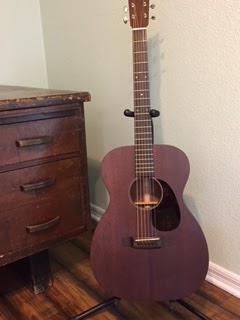
Which is why I bought a new guitar last week (at The Fret House in Covina). It's a
Martin 00-15 mahogany beauty with tones so deep and resonant it nearly makes me
cry when I play it. I spent weeks researching what I wanted, and with the help
of a few old friends and some really cool new ones (thank you, Doug, Tom, Rick
and Jorge!), I bought the guitar I've
wanted all these years. (See photos below.) And oh Lordy, am I ever ready to
make some new memories.
Thursday, June 8, 2017
In Memoriam: Brian Doyle
A surging river has reached
the end of its tumultuous journey and transitioned into the eternity of the
sea.
A voice as clear and pure as a
crystal bell has rung out its last metaphor and repetition, leaving behind a
resounding silence.
One of "the Good People," in the purest Irish sense of the word, has left us.
The first poem I read by Brian
Doyle left me weeping and asking aloud, "Who is this man?" One of the
finest writers of our time, it turns out. A man of love and life and laughter
and more love and more laughter. A dreamy poet and even dreamier novelist who
crafted words with the same playfulness as Yeats, the same passion as Dylan
Thomas, but with a style so unique it could only have been a gift to us from
the Universe.
And oh, how I will miss him.
How we all will, his wife, his family, his friends, and all the thousands of us
who read his work and reeled from its beauty.
I miss him already. As I write
this, I'm halfway through his novel, Mink River (a novel I put off reading for too long, it turns out), and I don't
want it to end, so I'm dragging my feet, reading a couple of pages a day,
savoring the words, the poetry, the longing, the deep love, the impossibly long
lists of flora and fauna, the archetypes, the archaic languages—Gaelic, Latin,
"American"—the innocence of the children, the mystic wisdom of the
non-human characters. What a book.
What a writer. What a voice.
What a short life for someone so filled with it, so willing to offer it.
I am bereft. We are bereft.
There are no words for this loss. Here, then, are some of Brian's:
Last Prayer
by Brian Doyle
Dear Coherent Mercy: thanks. Best life ever. Personally I never thought a cool woman would come close to understanding me, let alone understanding me but liking me anyway, but that happened! And You and I both remember that doctor in Boston saying polite but businesslike that we would not have children but then came three children fast and furious! And no man ever had better friends, and no man ever had a happier childhood and wilder brothers and a sweeter sister, and I was that rare guy who not only loved but liked his parents and loved sitting and drinking tea and listening to them! And You let me write some books that weren't half bad, and I got to have a career that actually no kidding helped some kids wake up to their best selves, and no one ever laughed more at the ocean of hilarious things in this world, or gaped more in astonishment at the wealth of miracles everywhere every moment. I could complain a little right here about the long years of back pain and the occasional awful heartbreak, but Lord, those things were infinitesimal against the slather of gifts You gave mere me, a muddle of a man, so often selfish and small. But no man was ever more grateful for Your profligate generosity, and here at the very end, here in my last lines, I close my eyes and weep with joy that I was alive, and blessed beyond measure, and might well be headed back home to the incomprehensible Love from which I came, mewling, many years ago. But hey, listen, can I ask one last favor? If I am sent back for another life, can I meet my lovely bride again? In whatever form? Could we be hawks, or otters maybe? And can we have the same kids again if possible? And if I get one friend again, can I have my buddy Pete? He was a huge guy in this life—make him the biggest otter ever and I'll know him right away, okay? Thanks, Boss. Thanks from the bottom of my heart. See You soon. Remember—otters. Otters rule. And so: amen.
—from A Book of Uncommon Prayer: 100 Celebrations of the Miracle & Muddle of the Ordinary (Ava Maria Press, 2014)
Subscribe to:
Posts (Atom)