Today Senator Elizabeth Warren was silenced by the GOP because she began to read words that would impugn the character of our about-to-be Attorney General, Jeff Sessions. (They weren't her words, by the way, they were the words of Civil Rights icon, Coretta Scott King.) That reminds me of the time I got divorced. What do the two experiences have in common? I, too, was silenced by a group of men so that I could not impugn the character of another man--my husband. Did I mention that he happened to be the pastor of my church?
When I left him, I had no intention of retribution or burning bridges. I was so hurt by his years of rejection, I just wanted to crawl away somewhere and recover so that I could be a better mother to our four children. For years, I had considered a separation, had begged for us to go to marriage counseling. But as the pastor of a fundamental church, he was more concerned about "what it would look like" if his congregation knew his marriage was in trouble. And let's face it, he had told me on more than one occasion that the most important thing in his life was "his church." His church?
When his daily criticisms and sneering disdain had hammered me down to the point of being clinically depressed, a family friend took me aside and said this: "Honey, I know you pray for him. But you've been praying a long time. What if you pray for the next ten years and after all that time, he's still the same guy?" OK, Dean used a stronger word than "guy."
And he was right. 35 years later, my ex is still the same "guy." But I haven't been married to him for the past 34.
When I left, he wrote up a "position paper" on what to do about me. Yep. It's true. I read it. He had a conversation with the elders in the church and decided they all had to protect their wives from my "influence." (Because they thought, if the wives knew the truth, they'd all start packing their bags?) On a Sunday morning, he stood in front of his congregation and read his pseudo-official document which decreed that no woman in the church should speak to me--not in person, not by telephone, and if they saw me in the street they were to turn and walk away (which, by the way, some of the women did when I happened to see them while doing business in the same city).
Weeks later, after I'd moved fifty miles away, he issued another statement from his pulpit: That I'd had a "breakdown." That I'd "gone away" to try to "recover." That he was "working on his marriage." (Little did the people in "his church" know he'd already started dating one of the nice single ladies in the congregation, who called to ask me if I intended to come back--because, she said, his statement had confused her regarding their relationship.)
Bizarre? Yes. Is it unusual for men to attempt to silence women who speak out against them? Oh, absolutely not. Right now I'm thinking of the couple who used to live next door to me. The wife called the police on her husband one day because "he had his hands around my throat and he just kept squeezing." His side of the story (which he later told to me) was: "I wasn't trying to hurt her. I just wanted her to stop talking."
If you're still wondering why women poured out into the streets on the day of the March for Women across this country, those are a few more good reasons.
The Republican dominated senate--the male dominated senate--made Senator Warren stop talking today because they couldn't stand to hear her read the words of truth in Coretta Scott King's letter. Warren's response was: "They can shut me up, but they can't change the truth." Amen. In spirit, I'm holding your hand, sister, and I'm holding it high. The more we are silenced, the louder our voice becomes.
Wednesday, February 8, 2017


Tuesday, January 31, 2017
A Blueprint for Successful Storytelling

In the eight years I've been posting to this, my beloved blog space, I have never had a guest writer. There's a first time for everything, right? I am so excited about the brilliance of this newly released book on story, I've asked author M. L. Welker to say a few words about how the book came to be. Here is his response--and may his words, both here and within the pages of his book, be an inspiration to you:
I’ve
always been fascinated with stories. When I was a little kid, I fell in love
with the fictional worlds of Star Wars, Indiana Jones, and Jurassic
Park. This led me to start writing my own stories and making my own
homemade movies as a hobby. But despite how fun that was, destiny seemed to
have other plans for me. At least at the time. I went off to college to pursue
a “safe” degree and a “normal” job. But the entire time I never lost my
obsession with stories. I kept writing on the side and learning more and more
about the craft and the magic of storytelling.
That we
humans find stories so transfixing is fascinating to me. When a movie starts,
when we read the first few lines of a novel, or when somebody starts to tell us
about “This one time . . .” it’s like our brains switch into story-receiving
mode and we’re locked in. From there, we are transported into story worlds in a
way that makes us feel almost like we are actually there, experiencing it all
right alongside the characters in the story. Well, at least if it’s a good
story.
Which
was what intrigued me most of all. Why were some stories really good and able
to hijack our brains, sucking us into their worlds, while other stories weren’t
and were kind of just boring? And why were some stories so good that even
repeat readings and viewings didn’t diminish their appeal? They are still
engaging and fun even though we already know everything that happens. Why?
This
began a lifelong obsession for me: What makes stories tick and why are the
great ones so great? How do they do it?
It was
really exciting when I found out there have been books written about this very
thing. It turns out many other folks have had an interest like me and analyzed
stories to find something of a secret formula. I pounced on these books. Some
of them were paradigm-shifting for me (like Save the Cat!). But not all
of them clicked. And some of them just made me wrinkle my nose. I felt like
they just weren’t quite talking specifically enough about what I was interested
in. Or at the very least they weren’t convincing me with their analyses. And
all of them (even Save the Cat!) were woefully deficient when it came to
helping me write my own stories.
It soon
became clear that to get the answers I was looking for, I was going to have to
go find them on my own.
Thus
began the journey that culminated in the creation of my own book on the craft
of storytelling: Blockbuster Blueprint.
I
didn’t start out wanting to write a book. At first I was just frustrated with
the existing material and decided to do my own investigation and write down my
findings. I’d use these personal notes to help myself with my own stories and
that would be that.
But as
I poured over stories and analyzed them, my notes grew and grew. Eventually I
had enough notes that folks started asking to see them and suggesting I turn them
into a book.
And
this struck a chord. This made perfect sense. These notes were, after all, my
own personal answer to the missing material I was after. So if I wasn’t
thrilled with the other books about story out there, it stood to reason there
would probably be other writers who felt the same way. In the end, it seemed
rather selfish to keep my findings and writings all to myself. So, I spent four
years working on transforming those notes into a book.
And now
the real fun begins. With Blockbuster
Blueprint now published, I can start using the lessons it teaches to write
even better stories than ever before. And the best part is, so can anybody else
who reads it. Which is great because if it helps other writers make their
stories better, all the readers, movie-watchers, and all-around story lovers
out there benefit. Myself included. And the world could always use more good
stories.
Sunday, January 29, 2017
Recipe for a Sunday morning
When Robert Frost began his poem "Directive" with this line, "Back out of all this now too much for us," he did so as preface to asking his readers to separate themselves from a world that Yeats would have characterized as being "full of weeping." As I've discussed previously on this site, Frost's "Directive" is a journey, in a sense, toward peace, gotten at by employing a childlike imagination.
Exactly. That is exactly how I felt this morning. I needed to separate myself for a time from news reports, from social media... and I needed to seek quiet and beauty. When I start out, and I encounter a place that looks like this:

my childlike imagination is awakened. Where do those roads go? What will we find? What will we see? And suddenly I feel myself begin to breathe deeply, to think about possibilities that are less negative, more ripe with beauty.
For today, my recipe was a simple one: Start with one good dog. Add a pack of water, snacks, emergency kit (just in case--always) and binoculars. Use a sturdy pair of hiking boots to begin a slow, methodical blending of yourself with the scenery. That's it.
Having Thomas with me today was essential because he often alerts me to things I can't hear or see. When we'd made the five-minute drive down the road to where the dirt roads pictured above are accessible, I got out and began my preparations--cap, sunglasses, pack--and immediately saw a small hawk, a kestrel. I did not take this picture, but this is what one looks like:

If I'd been in possession of my Pentax camera with the telephoto lens, I'm sure I could've gotten a shot just like this. Kidding, but I was able to get pretty close watching him through the binoculars, and my guy looked like this guy--only much fatter. When he became annoyed with my creeping ever closer (and who wouldn't), he coasted away with a couple of wing flaps. I then returned to the business of getting Thomas out of the truck, and as soon as he hit the ground, he saw a bird. Far off in the pasture we'd parked next to, he'd seen movement, and he watched. I, of course, said, "What the heck are you lookin' at? I don't see anything," as I usually do, but swung the binocs up to have a gaze--and immediately spotted a roadrunner. No, not the cartoon guy, this guy:

Well, not exactly this guy, but his cousin who looks exactly like him. There is something about roadrunners that is absolutely comical. They're very large birds; this guy was bigger than the kestrel by far. But, I mean, look at his tiny wings and his way-too-long tail feathers and his goofy, adolescent boy hairstyle (or, er, featherstyle). They run. Stop. Run. Stop. Run. Stop. as they alternately look for lizards and check for predators. I watched my goofy guy until Thomas pressed against my leg, reminding me that we were about to wander off into the countryside.
We didn't walk far before we came upon a puddle still left over from last weekend's rainstorms. It was cold last night, and the ice on this one was still melting, glinting beautifully in the morning sun. In the mud next to the large puddle we saw some tracks:

To give you some perspective on size, here's my size 6 boot next to one:

I was not surprised, then when we rounded a bend in the road and saw, three hundred yards or so in the distance, the biggest damn coyote I think I've ever seen. Seriously. This guy was the size of a Mexican gray wolf. And as he began to slowly slink off to the west, he did that characteristic coyote look back over his shoulder like a thug who's been caught loitering before committing a crime, and he looks back as if to say, "Fine, I'll leave, but I'll be back when you're not around, pal." He was beautiful, though.
So was the huge old redtail hawk we saw next. The old man was sitting in the top of a dead oak tree, basking in the rising sun. I got a good look with the binoculars before he swooped away. That's how I could tell his age. Old hawks are like old cars--a bit faded and banged up, with a few dents and scratches here and there. But his wings were still strong and steady, so he's got a couple more years of vermin hunting ahead of him.
It's been crazy-windy here lately, and at one point the road was completely blocked by tumbleweeds, so I took a minute to clear a path through. I only mention this brief pause in our adventure to applaud the behavior of this good dog, who knows that when his leash is dropped he is on "Wait" until I pick it up again, so he sat himself down and enjoyed the warmth of the sun while I worked (and got stickered up a bit, but that's ok; it'll make the going easier for the next guy).

I have always loved Frost's sense of taking his reader with him--on a journey of the imagination or just out "to clean the pasture spring." And you should know, Dear reader, that when I'm out walking on a day like today with my trusty bird-spotter and best friend, I am always taking you with me, wishing you were along for the walk with us. We might not even speak other than to exchange a few words about direction, or to point out to the other some interesting sight off in the distance. I am always mindful of you there, in my heart. So let me leave you with a tiny gift brought to mind by today's journey:
I'm going out to clean the pasture spring;
I'll only stop to rake the leaves away
(And wait to watch the water clear, I may):
I shan't be gone long.--You come too.
I'm going out to fetch the little calf
That's standing by the mother. It's so young
It totters when she licks it with her tongue.
I shan't be gone long.--You come too.
Exactly. That is exactly how I felt this morning. I needed to separate myself for a time from news reports, from social media... and I needed to seek quiet and beauty. When I start out, and I encounter a place that looks like this:
my childlike imagination is awakened. Where do those roads go? What will we find? What will we see? And suddenly I feel myself begin to breathe deeply, to think about possibilities that are less negative, more ripe with beauty.
For today, my recipe was a simple one: Start with one good dog. Add a pack of water, snacks, emergency kit (just in case--always) and binoculars. Use a sturdy pair of hiking boots to begin a slow, methodical blending of yourself with the scenery. That's it.
Having Thomas with me today was essential because he often alerts me to things I can't hear or see. When we'd made the five-minute drive down the road to where the dirt roads pictured above are accessible, I got out and began my preparations--cap, sunglasses, pack--and immediately saw a small hawk, a kestrel. I did not take this picture, but this is what one looks like:
If I'd been in possession of my Pentax camera with the telephoto lens, I'm sure I could've gotten a shot just like this. Kidding, but I was able to get pretty close watching him through the binoculars, and my guy looked like this guy--only much fatter. When he became annoyed with my creeping ever closer (and who wouldn't), he coasted away with a couple of wing flaps. I then returned to the business of getting Thomas out of the truck, and as soon as he hit the ground, he saw a bird. Far off in the pasture we'd parked next to, he'd seen movement, and he watched. I, of course, said, "What the heck are you lookin' at? I don't see anything," as I usually do, but swung the binocs up to have a gaze--and immediately spotted a roadrunner. No, not the cartoon guy, this guy:

Well, not exactly this guy, but his cousin who looks exactly like him. There is something about roadrunners that is absolutely comical. They're very large birds; this guy was bigger than the kestrel by far. But, I mean, look at his tiny wings and his way-too-long tail feathers and his goofy, adolescent boy hairstyle (or, er, featherstyle). They run. Stop. Run. Stop. Run. Stop. as they alternately look for lizards and check for predators. I watched my goofy guy until Thomas pressed against my leg, reminding me that we were about to wander off into the countryside.
We didn't walk far before we came upon a puddle still left over from last weekend's rainstorms. It was cold last night, and the ice on this one was still melting, glinting beautifully in the morning sun. In the mud next to the large puddle we saw some tracks:
To give you some perspective on size, here's my size 6 boot next to one:
I was not surprised, then when we rounded a bend in the road and saw, three hundred yards or so in the distance, the biggest damn coyote I think I've ever seen. Seriously. This guy was the size of a Mexican gray wolf. And as he began to slowly slink off to the west, he did that characteristic coyote look back over his shoulder like a thug who's been caught loitering before committing a crime, and he looks back as if to say, "Fine, I'll leave, but I'll be back when you're not around, pal." He was beautiful, though.
So was the huge old redtail hawk we saw next. The old man was sitting in the top of a dead oak tree, basking in the rising sun. I got a good look with the binoculars before he swooped away. That's how I could tell his age. Old hawks are like old cars--a bit faded and banged up, with a few dents and scratches here and there. But his wings were still strong and steady, so he's got a couple more years of vermin hunting ahead of him.
It's been crazy-windy here lately, and at one point the road was completely blocked by tumbleweeds, so I took a minute to clear a path through. I only mention this brief pause in our adventure to applaud the behavior of this good dog, who knows that when his leash is dropped he is on "Wait" until I pick it up again, so he sat himself down and enjoyed the warmth of the sun while I worked (and got stickered up a bit, but that's ok; it'll make the going easier for the next guy).
I have always loved Frost's sense of taking his reader with him--on a journey of the imagination or just out "to clean the pasture spring." And you should know, Dear reader, that when I'm out walking on a day like today with my trusty bird-spotter and best friend, I am always taking you with me, wishing you were along for the walk with us. We might not even speak other than to exchange a few words about direction, or to point out to the other some interesting sight off in the distance. I am always mindful of you there, in my heart. So let me leave you with a tiny gift brought to mind by today's journey:
The Pasture
by Robert Frost
I'm going out to clean the pasture spring;
I'll only stop to rake the leaves away
(And wait to watch the water clear, I may):
I shan't be gone long.--You come too.
I'm going out to fetch the little calf
That's standing by the mother. It's so young
It totters when she licks it with her tongue.
I shan't be gone long.--You come too.
Sunday, January 22, 2017
Women's March, Riverside

When I first heard of the Women's March on Washington, I thought,
"That's going to be a lot of women," and I looked forward to seeing
the event unfold on television from the peace and safety of my living
room. (As an introvert, being in a crowd is challenging, to say the least. I
simply shut down and become nearly catatonic.) Then I learned there would be a
march in Los Angeles, which I thought would draw a significant crowd but
demonstrably smaller. (Boy, was I wrong.) I also thought my daughter might go,
depending on the weather, and if she went (and drove), I could probably summon
the courage to go (mostly because I'm extremely proud of her, and that joy
would empower me). Then a friend on Facebook sent me an invitation to
"like" the Women's March taking place in Riverside. I clicked on the
page, read the description of where the march would take place, and let me tell
you (if I can) how profoundly that affected me.
In the summer of 1970, I got my driver's license, which was the one
saving grace of that summer. I was sixteen. The summer before, my mother had
married my wicked step-father, and we had moved from Orange County to the
Riverside area. Throughout the year following that event, I warded off countless unwanted leers, touchings and attempted violations by my mother's husband. I appealed to my mother—to no avail. Getting my license meant
leaving the house at night. There was a Christian coffeehouse, The Gathering
Place, on Sixth Street in Riverside in those days. It was my safe haven and
best excuse. Once my mom had been there and determined that it was a nice place
for Christian young people to hang out, she let me go as often as I wanted (and
also because, let's be honest, my presence in the home was causing a great deal
of tension in the new marriage she was determined to make a go of). I would
drive to the coffeehouse, stop in long enough to drink a cup of coffee, then
walk the outdoor mall for hours—until I knew my mom and
the pervert she married were sleeping.
As soon as I saw that the Riverside march began on Sixth Street, I knew
I had to go. That's what this was all about. At sixteen, I had no one to turn
to, no one to speak up for me as an advocate. I wanted to march with other
women who were willing to speak up. I wanted to march for the girl I was at
sixteen.
I arrived early and parked easily. (Though the city has changed a great
deal in terms of gentrification, I can still find my way around the Mission Inn
and library pretty well, despite the fact that it's been almost fifty years
since I used to bum around down there.) As I walked toward the mall, I joined
other women—and men and children and some pretty adorable dogs—who would be
marching as well.
A man was playing Dylan's "The Times They Are A'Changin'" on
the guitar and singing, and I was reminded of the times I would bring my own
guitar to this very spot, carrying it over my shoulder like the hippie I was,
settling in on a spot of grass to sing "Blowin' in the Wind." At the
thought of that, remembering the lonely, isolated, troubled girl that I was
back then, I felt a lump rise in my throat and nearly broke down weeping.
Instead, I shook off the ghosts of the past and gave myself something
meaningful to do in the present. I started taking pictures. The guy pictured below was with Rise Up, California, and any
time I began to feel overwhelmed emotionally, I glanced back to see him
standing there, a strong yet unassuming man who happened to be wearing a pink
"pussy" hat on his head, clearly here in support of women. He gave me
hope.

And Sister, let me tell you, so did all the women who showed up. The
city had given event planners a permit for 500 people to march. 5,000 showed
up. There were signs everywhere, and when I realized I wouldn't be able to snap
photos of all the ones I loved, I decided to go live on Facebook and simply
stream what was going on. That's when it all became real to me, when I began to
share photos and clips on social media and people responded with comments and
likes and hearts. In the first hour, over one hundred people had watched the live
stream. My daughter (who was forced by heavy snowfall on her mountain to remain
at home, alas) sent me a text letting me know that she was watching—and that my
granddaughter, away at college in Anchorage, Alaska, was also marching—in snow
and freezing temperatures. If I had nudged myself out of my comfort zone on a
bright sunny day to participate, she had leapt frozen feet first into the icy
darkness to take part, which I thought was absolutely heroic (which you should,
too, even if she's not your granddaughter).


These pictures I took look like a party compared to what marchers endured in Anchorage. But hey, they still had a great time!

The photo below was taken as we marched, so the quality is poor, but I liked the idea of this--Let's make sure we're inclusive:

And this sign nearly had me weeping again:

All Saints Episcopal Church is where I was married in 1972. It is the place where my spiritual journey began. Once upon a time, a nineteen-year-old kid who liked to draw comics started leading a Sunday night fellowship there. His name is Greg Laurie. He's now the pastor of Harvest Christian Fellowship in Riverside, one of the largest churches (in terms of membership) in California, if not the entire country. Greg and I were once good friends, but I can no longer get in to see him. Alas, that is a story for another time, another place. But getting back to All Saints: Hell yeah, they mean it when they say, "Everyone is welcome." These ladies had gone into the top tiers of a parking structure so their sign could be seen by the multitudes.
As we walked, I was a single person weaving in and out of families with kids in strollers, some people pushing disabled folks in wheelchairs, and large groups of friends who came to walk together. Two older women walked ahead of me for awhile, holding hands, leading a toy poodle that trotted along in a cart because her back legs were paralyzed. I wanted to get a photo, but they were walking too fast for me to keep up. And then I walked beside this gentleman for awhile:

Again, forgive the quality; I was walking and didn't want to interrupt to ask for a photo--he was explaining to his grandsons, with great earnestness, how "gender shouldn't matter--it should never matter" when people are trying to accomplish things.
His wisdom and tenderness with those boys just about swept me away again. Oh, to have had a father or grandfather who would have cared for me in such a way. And he is so, so right; gender should never matter. Women should be seen as capable individuals, not judged like every day is a beauty contest they are forced to participate in whether they want to or not. Certainly we deserve respect. At times it appears we will only get that respect if we demand it. So be it. I am no longer the young girl who suffered in silence. Come at me, Donald Trump, or anyone else of your ilk. Go ahead. Make my day.
Wednesday, January 18, 2017
Treasures
In our quest to lose weight (well, my quest; Thomas is pretty darn fit
for a nine-year-old dog), Thom and I have been taking long walks out in the
country. Truth be known, we could hang around here at our senior community;
there is plenty of level walking space and the views are spectacular:

But we like to get out and walk a lonely road where Thomas can sniff
some wild animals and I can lose myself in further plot points for the book
project I'm working on. Last weekend we walked three miles down a dirt road
that took us past meadows and tall old oak trees. I stopped to take this photo
after we saw a large animal—a coyote or bobcat—make for the trees when it heard
us coming:

Today we went exploring, finding a new trail that begins in the hills
above my little town. I'd taken Thomas up there on a drive, just looking for
fireroads and other places to walk. What we saw was an old jeep trail that
eventually became a single track, it appeared, so we came back today to walk
down it and find out.
Usually what I discover when I find a spot where I can park the truck
near a trailhead is that other folks have been happy to find such a place as
well—so they can dump their old mattresses, furniture, TV sets and whatnot
without having to go to the landfill and pay a fee. Sigh. So I always put
mental blinders on for the first hundred yards or so, just chatting with Thom
and overlooking the fact that some folks are just bound to pollute where they
live.
I think of Robert Frost nearly every time we venture out this way.
There's always more than one way to go, and I'm always struck by the lines
"Oh, I kept the first for another day!/Yet knowing how way leads on to
way/I doubted if I should ever come back." I find myself telling Thomas
aloud, "We'll come back here. We'll come back here so we can go that way
next time." That's the cool thing about living here and being retired;
it's going to take me quite a long time to discover all the possible hiking
trails.
So today the first trail we followed led us only up a hill—the steepest
hill I've been up in a long, long time, so steep that we had to descend with
great care and caution. And I was ever so grateful for how far Sgt. Thomas
Tibbs has come in his training and adjustment to life as a writer's dog.
"Walk slow, Thom," I told him, a command I began teaching him from
the time I brought him home. Most of the time, we both want to walk briskly
down the trail, to see how much we can discover and how many calories we can
burn. But sometimes we need to go at a snail's pace, and I wanted him to
understand that. So he led me slowly and carefully back down the dead-end hill,
and just as we neared the bottom, I discovered the biggest piece of malachite
I've ever found.
Malachite is a green stone found around the world and in the Southwest
United States, especially in Arizona. I've found small pieces on my hikes
before, but this one was much bigger. And there it was right smack dab in the
middle of the road, glistening in the new morning sun as the frost from the
previous night began to evaporate. I whisked it into my pocket. Here it is on a
green plate (for comparison):

I keep saying I'm going to get a rock polisher so I can pretty up my
stones. They look pretty fabulous when they're gussied up. If you click here,
you can see some Google images of them.
For the quad workout and the discovery of the malachite, I felt our walk
had been productive after we'd only been out a half hour. But on the way back
to the truck, we discovered another road, one that looked... less traveled by. We walked down it about a hundred yards, just far enough for me to snap the photo below. Then we headed back. We'll keep that one for another day.

Tuesday, January 3, 2017
Pound for pound
In the five weeks since
Thanksgiving, I’ve gained five pounds. It started with this:

For those of you who slept
through math class, that’s a pound a week. A pound. If it doesn’t seem like
much, imagine hefting a one-pound package of ground beef in your hand. Then
imagine finding a spot on my mid-section in which to stick it. Do that four
more times. (No, the weight is not evenly distributed throughout my body; it’s
all right there around my middle.) If that still doesn’t seem like a lot to
you, consider the fact that, by Thanksgiving, I had already gained five pounds
in the previous five weeks after hurting/probably breaking (we’ll know when the
MRI results are in) my foot, which meant my two-to-three-mile daily walks were
limited to a very slow stroll around the block.
If you know me well enough to
have seen me in person, and you’re thinking to yourself right now something
along the lines of “Oh, you could put on five pounds and no one would notice”
or “Well, you’ll easily lose the weight after the holidays,” please humor me by
reading the remainder of this post. Because you’re wrong inaccurate on
both counts.
I would notice. I do notice, I
mean. I know I’ve gained weight by the way my clothes feel and by the way
movement feels. When I say “movement,” I mean the way it feels to trudge up a
steep hill in hiking boots or to attempt the “forward fold” position in yoga.
There is a certain freedom of movement that comes with a lean body weight, and
it’s a feeling I learned to love as a kid, when I could still swing my leg
easily over a bike seat or the saddle on my horse. Now, when my body is round,
I feel every step on a long hike, especially when trying to push myself up a
hill. Hell, I already struggle with malformed lungs. It’s just adding pain to
punishment when you put an extra ten pounds in my backpack, so to speak.
Also, I don’t own two separate
wardrobes, one for when I am round and one for when I am not. Thus, I am
uncomfortable in my clothing until I take off the weight.
Which leads me to the second
often heard remark—that I can “easily” lose the weight. Really? “Easily”? No.
Never. (Well, once, actually, a year and a half ago when I had C. Diff after I
had taken antibiotics for pneumonia and I ate approximately zero calories over
the course of two weeks. And with the effects of the C. Diff, that was almost
like negative numbers in terms of the calorie totals. So I guess, yeah, that
was “easy;” I just had to literally starve myself while experiencing
please-kill-me-now pain. Pretty sure I don’t want to do that again, even if it
means rapid weight loss.)
Losing weight is hard. I don’t
care who you are. Chris Christie. Oprah. Adam Driver (aka Kylo Ren; Driver
recently lost 40 pounds from his already skinny-ass frame in preparation for
his role in the movie Silence).

My mama’s genetics have given
me longevity, great skin, an analytical mind—and a predisposition to obesity
(all of which I have passed on to my daughter and she has passed on to hers).
Of course, I really won the DNA jackpot in this regard because my proud Irish
pa also carried the same predisposition. So boom—once I crested the hill of 30,
I began to pack on weight—easily—and struggle determinedly to take it off
again. Just. like. Oprah. (Well, except without all the life coaches and
therapists and Dr. Phils. Man, I could’ve used Dr. Phil a few times.) Like
Oprah, I “love bread.” I love it so much I bake my own. And I eat it. Nearly
every day. Which is fine when I’m at my target weight and I’m following my
normal routine of walking/hiking/biking/yoga/weight training. It’s a caloric
seductress when I’m also eating Christmas cookies and fudge and See’s
chocolates and candy canes and pecan pie and (cheese) tamales and one or two or
sixteen other treats I only eat at this time of year. And yes, it’s only once a
year, and I’m pretty good at clearing it all out by January 1 by giving it to
my grandkids. Then someone says, “Oh, I didn’t see you at Christmas so I’m
giving this to you now. Happy New Year!” and hands me this:


So what do I do? How do I get
back to the weight that lets me swing my leg over my bike or bend at the waist
and touch the floor? What IS the secret to weight loss? It’s this: ELEM. Eat Less
Exercise More. That’s it. That’s how you lose weight. Period.
Now, I know there’s other
stuff to know. Like how BAD it is for you to binge diet or eat only watermelon
for a week or drink only green smoothies for ten days (which, in real life,
almost killed my brother, like, for real and actually dead—almost). And that
your body has a “set point” at which it would love to stay (mine is 135), so
you have to be patient when it seems like you’ve been going without fresh,
homemade bread for two weeks AND HAVEN’T LOST A SINGLE POUND. And yeah, sugar
is addictive. So are salty-crunchy snacks. (No kidding—look it up.)
All of that is great to keep
in the back of your mind (and I know Oprah’s trainers and counselors are
reminding her of those things on a daily basis). But on Weight Watchers (bless
them; it’s really a good program), here’s what she’s practicing: ELEM. Yep. One
of the most powerful women in America is doing exactly what I’ll be doing to
lose the weight. She’s eating less (smaller portions of what she loves to eat,
and probably better choices, so yes, bread, but maybe not the tiramisu) and she’s
exercising a bit more. Or a lot more. I don’t know, Oprah and I haven’t chatted
lately.
So after I clear the house of
all the incredible stuff I get to eat from November through December (including
the chocolates packed in ice and sent to me from France, so fancy they have
their own drawstring bag—yes, I do have nice friends), I will study my portions
for breakfast, lunch and dinner, and I’ll cut back for a while. And, I’m happy
to say, I’ve already started back into my walking/hiking regimen. Three days ago,
Thomas and I walked a mile and a half. Yesterday we walked a mile down a
country road and a mile back in bright sun with a view of snow on three
separate mountain ranges surrounding us. (Getting outside to exercise is the
best way for me. It’s just depressing to walk, walk, walk on a treadmill
indoors, though I’ll do it if I have to.) The weight will come off—slowly, as
it should. By spring I should be much closer to my ideal weight.


By the way, if you’re thinking it might be
easier or better to simply forego all the sweet stuff during the holidays, let
me just add this tiny bit of full disclosure… and I’m only telling you this
because we’re friends, dear reader, and I feel safe with you. I wouldn’t share
it with just anyone:
The Dark Days are really
difficult for me both emotionally and psychologically. As we move toward the
winter solstice, I often find myself becoming deeply sad, in some years,
clinically depressed. It’s not important why. It just… is. Treating myself
makes me feel better. Am I ‘eating my emotions’? You betcha. And that’s ok.
Certain types of cookies and candies are reminiscent of holiday times with my
family, with my grandma who was a round jolly woman (except on those times when
she did some binge diet and got skinny and snapped a photo and then started
eating again--see photo below). I may get sad because it’s too dark or too cold to sit on the patio in the swing and read books or write stuff, but then I remind
myself that there’s a chunk of homemade fudge with my name on it sent all the
way from Ohio from friends who love me, and I rally. I eat the fudge, and I
think fondly and lovingly of Bill and Stephanie (or Bob, if I’m eating the Z
chocolats), and I chuckle. Because I know that I’m setting myself up for some
really long walks in the country with my dog. But really, is that such a bad
thing?
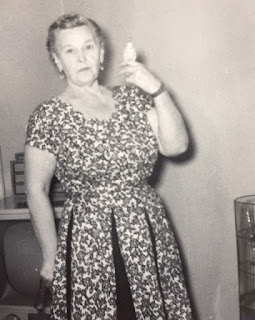


This is how I remember my Grandma Lila--round and sassy and always with a pet parakeet.

Same Grandma, now rockin' the weight loss.

Good job, Grandma! You're beautiful (round or lean)! Love you!
Sunday, January 1, 2017
Hope is the thing with feathers
"In Buddhist thought, hope is considered dangerous because it's not
about what's happening right now; it's about the desire for some future
outcome." –Eva Saulitis in The Sun magazine
There's been a lot of talk about hope lately. Those whose candidate won
the presidential election talk of 'having hope,' while those whose candidate
lost are encouraging each other not to 'lose hope.' I've been ruminating on it
a lot—mostly because I've been reflecting on the legacy of Barack Obama... and
the "audacity of hope."
The first definition of "audacity" is "the willingness to
take risks," (which, as Americans, we would applaud). But the second
definition has a less positive connotation and suggests rudeness or impudence.
Thus Obama's catch phrase can be interpreted two ways: "Let's be willing
to take risks in order to bring about the change we need!" or "Whether
you want us to intrude with our new way of doing things or not, we're
here."
It seems—to me, at least—that these days everyone is interpreting
everyone else, and no one is really listening. Unless the other person is
saying exactly what we want to hear or what we believe, we tend to, at best,
tune them out and, at worst, shout them down or shut them up.
Oof. I've gotten really tired of it, of watching people beat each other
up verbally while closing their minds to any consideration of the other side. If
we hope for anything, it should be to cease the contention and simply begin a
conversation. That's the only way change or peaceful coexistence will ever take
place.
But hope seems ephemeral to me. And I find myself leaning toward that
Buddhist idea of it—that hoping only leads us to dwell on what may or may not
happen in the future. And that distracts us from living in and appreciating
this moment we're experiencing right now.
One of my dearest friends is currently battling Stage 4 metastatic
cancer. I pray for him daily. But it's not a prayer for healing, and I'm not
going to say—to him or anyone else—that I'm hoping for his recovery. Because,
as I said, hope is a transient thing, too ethereal for any worldly purpose, an
emotion lacking in any substantive use. No, rather than "hope" for
him, I think I prefer to embrace an attitude of gratitude. Whatever the future
holds for him, I pray that he has the strength to face it and that he is
surrounded with love as he does.
I pray this for all of us in the new year. That instead of hoping for
change, we accept and embrace what we have—all the good and beautiful things
that we have—just as they are today. That in this day, in this hour, in this
moment when we are pausing (if only ever so slightly) to reflect upon the year
that has passed and consider the one that is looming, we breathe deeply then
open our eyes and try to see what is before us, open our ears and try to hear
those things that will bring us to true harmony and understanding—whether they
sound grating at first or not.
Buddhism teaches that life is suffering, and that we suffer because we
want. In 2017, I don't want to spend any time or energy dwelling on what I
don't have. I want to try to choose, in each new day, to appreciate every
single precious thing I do have, whether it is something as trivial as a good
cup of tea or something as eternal as the legacy of my children. I am modest in
material possessions but absolutely abundantly rich in daily blessings, so much
so that, when I stop to consider my wealth, it makes me feel magnanimous enough
to allow others to have ideas that differ from mine. Yes, I want to change
their minds, and I passionately want to do so if what they believe brings harm
to anyone who has been marginalized in our society. But in order to do that, I
realize that I have to hear them first, to listen before I can speak. If I have
any "hope" in this new year, that is it; to listen before I speak,
and to see all the good things that have been laid at my feet.
Subscribe to:
Posts (Atom)